English is no longer just a school subject — it is a life skill. For the youth of Bihar, good spoken English opens the door to better jobs, higher studies, government and private sector interviews, and confident communication anywhere in India. The good news is that in 2026, learning spoken English does not need expensive coaching or a big city. With free government training, online resources and daily practice, any young person in Imamganj, Gaya or anywhere in Bihar can start speaking English confidently.
In this guide, Lok Kala Vikas Manch (LKVM) explains the easiest free ways to learn spoken English, a simple 90-day practice plan, common mistakes to avoid, and the jobs that become possible once you can speak English well. Read more such guides on our Stories & Insights page.
Why Spoken English Matters for Bihar's Youth
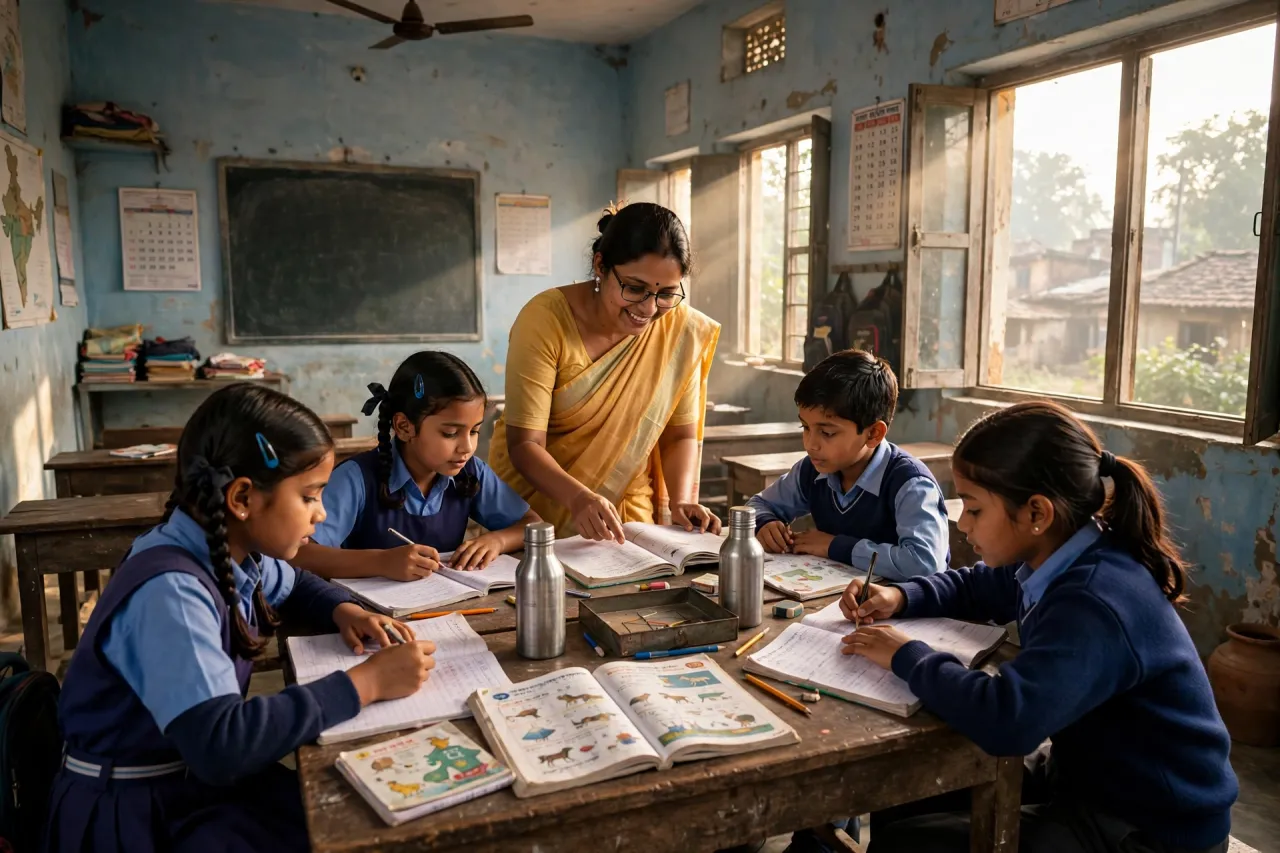
Most students in Bihar study English from Class 1, but very few get a chance to speak it. That gap shows up at the worst moment — in a job interview, a college presentation, or a customer-facing role. Employers today do not expect perfect grammar; they expect clear, confident communication.
- Jobs: Private companies, BPOs, retail, hospitality and teaching jobs in Patna and other cities prefer candidates who can speak basic English.
- Competitive exams: Interviews for banking, SSC, railways and state government posts reward confident communication.
- Higher studies: College seminars, presentations and group discussions are mostly in English.
- Confidence: Speaking English well removes hesitation and helps young people express their ideas anywhere.
Free and Low-Cost Ways to Learn Spoken English in Bihar
1. Kushal Yuva Program (KYP) — Free Government Training
The Kushal Yuva Program (KYP), run under the Bihar Skill Development Mission, is one of the best free options for youth aged 15 to 28. Its course covers computer skills, communication skills in English and Hindi, and soft skills — exactly the combination employers look for. Training is provided at local KYP centres across Bihar, and eligible youth can enrol free of cost. For full details, please confirm at the centre — eligibility, documents and batch timings may change from time to time.
2. Free Online Resources and Mobile Apps
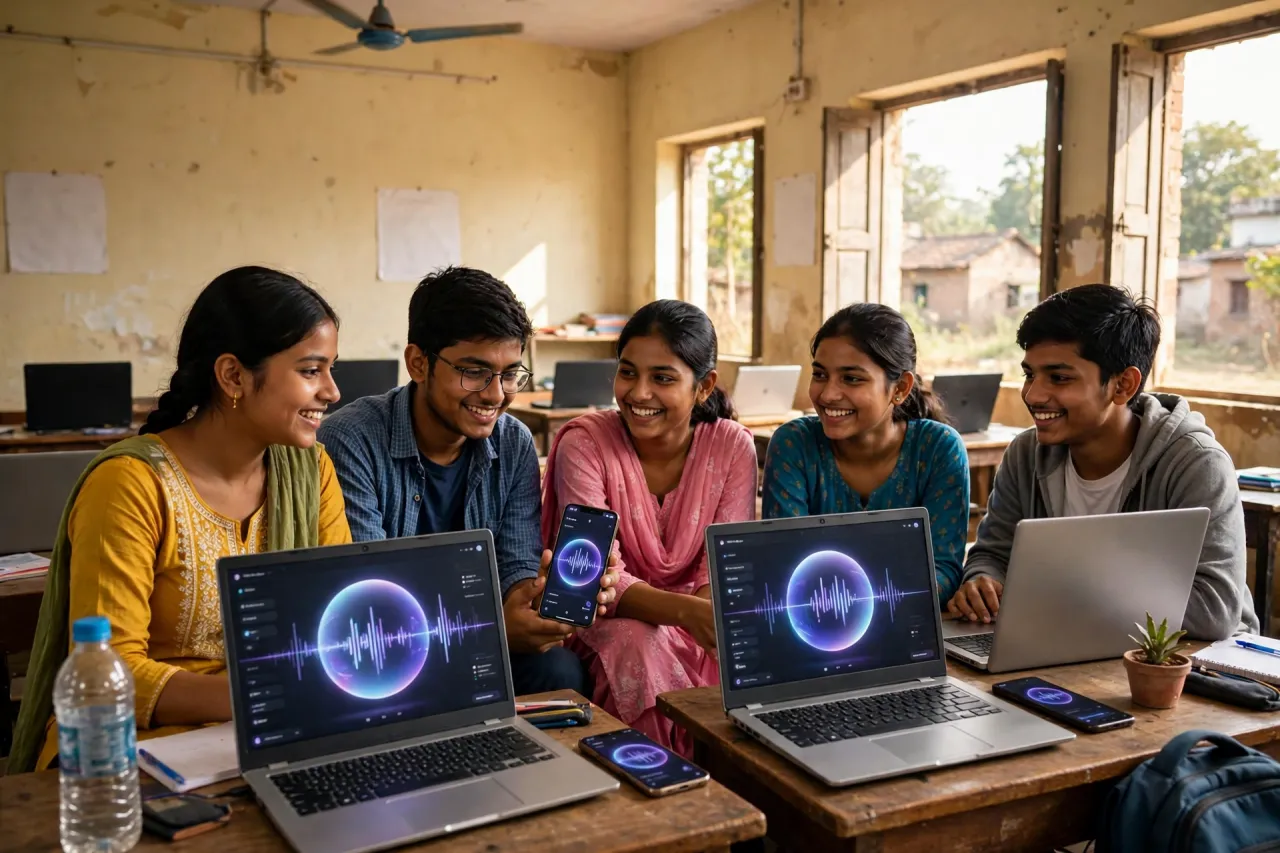
A smartphone and internet connection are enough to start. Free YouTube channels, English learning apps and AI chat tools let learners practise listening and speaking every day. The trick is to use them actively — repeat sentences aloud, record your own voice, and speak along with the lesson instead of only watching.
- Watch one short English conversation video daily and repeat the dialogues aloud.
- Use a free dictionary app to learn 5 new words a day — and use each word in a sentence the same day.
- Practise with a friend: fix 15 minutes daily for an "English only" conversation.
3. Community Classes and Local Guidance
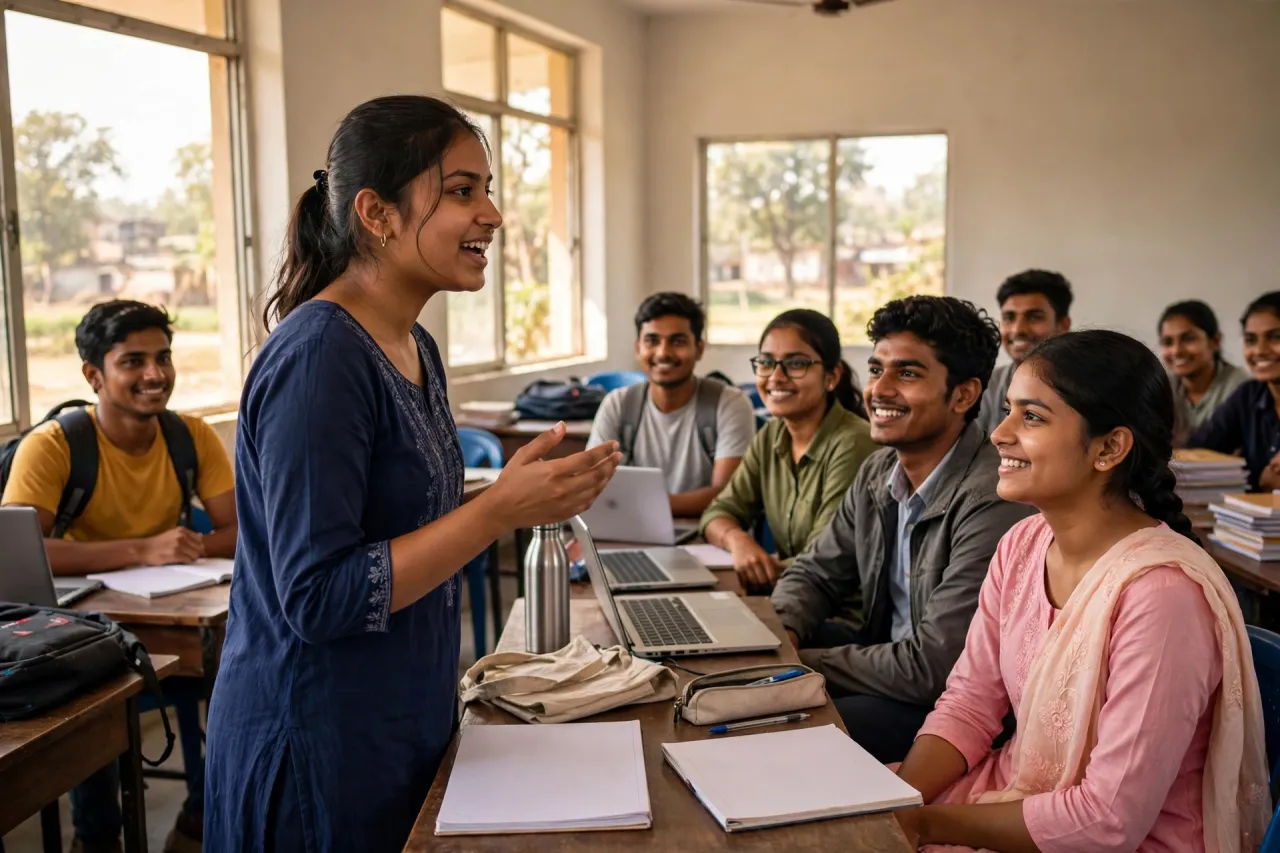
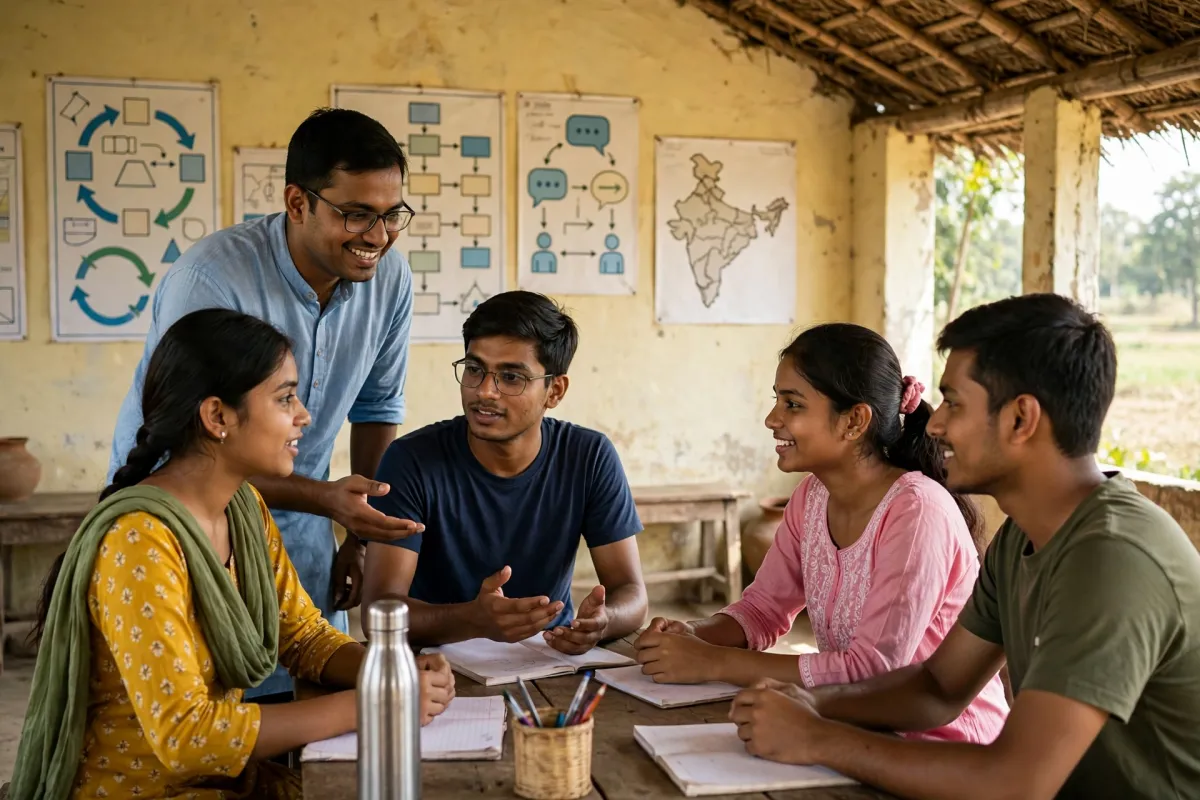
Many villages and small towns now have community learning groups, libraries and NGO-run classes where youth practise English together. Learning in a group removes fear — everyone makes mistakes, and everyone improves together. Lok Kala Vikas Manch guides local youth towards such free training options and helps them choose the right course. Please confirm at the centre for current batches and timings.
A Simple 90-Day Spoken English Practice Plan
You do not need 3 hours a day. Just 30 focused minutes daily for 90 days can change how you speak. Follow this plan:
- Days 1–30: Build the base. Learn 5 new words daily, practise basic sentences about yourself, your family and your village, and listen to 10 minutes of simple English audio every day.
- Days 31–60: Start speaking. Speak 15 minutes daily with a partner, describe your day aloud in English, and record a 1-minute voice note in English every evening.
- Days 61–90: Build confidence. Give a 2-minute talk on any topic, practise common interview questions, and speak English in real situations — at a shop, on a phone call, or while introducing yourself.
Common Mistakes and How to Fix Them
- Only studying grammar: Grammar helps, but speaking needs speaking. Give at least half your time to talking, not just reading rules.
- Fear of mistakes: Mistakes are proof that you are practising. Even fluent speakers make them — the difference is they keep speaking.
- Learning words without using them: A word you never speak is a word you will forget. Use every new word in a sentence the same day.
- No daily routine: Practising once a week does not work. Even 15 minutes every day beats 2 hours once a week.
- Comparing yourself with others: Compare yourself only with your own yesterday. Progress in speaking is slow at first, then suddenly fast.

Jobs and Career Options After Learning Spoken English
Good spoken English does not guarantee a job, but it removes a barrier from almost every good job. Some roles where it makes a direct difference:
- Customer service and BPO: Voice and chat support roles in Patna, Delhi and other cities.
- Retail and hospitality: Sales, front desk and hotel roles that deal with customers daily.
- Teaching and tutoring: Private tuition and school teaching posts value English-speaking teachers.
- Delivery, logistics and field sales: Roles that need clear communication with customers and managers.
- Government and competitive exams: Better interview performance in banking, SSC, railways and state services.
- Online work: Freelancing, content writing, data work and digital services where English is the working language.
How LKVM Can Help
Lok Kala Vikas Manch (LKVM) works for the youth of Imamganj and nearby areas — guiding students towards free skill training like KYP, helping them choose the right course, and supporting community learning. If you or your child wants to learn spoken English or join a free skill training programme, reach out to us. Please confirm at the centre for current batches, eligibility and documents.
Lok Kala Bhawan, Gewalganj, Imamganj, Bihar – 824206
Phone: +91 9523012888
Email: info@lkvmbihar.in
Frequently Asked Questions (FAQs)
1. Can I learn spoken English for free in Bihar?
Yes. Programmes like the Kushal Yuva Program (KYP) offer free training including communication skills. Free apps, YouTube lessons and community practice groups also cost nothing. Please confirm at the centre for current batches and eligibility.
2. How long does it take to speak English fluently?
With 30 minutes of daily practice, most learners start speaking basic English confidently in 3 months and become comfortable in 6 to 12 months. Regular speaking matters more than total hours studied.
3. I studied in a Hindi-medium school. Can I still learn?
Absolutely. Most successful English learners in Bihar come from Hindi-medium schools. Start with simple sentences, speak daily, and do not worry about accent — clarity matters, not accent.
4. What is the age limit for free spoken English training under KYP?
KYP is generally meant for youth aged 15 to 28 years. Eligibility rules can change, so please confirm at the centre before applying.
5. Do I need a smartphone or computer to learn English?
A basic smartphone helps a lot, but it is not compulsory. Books, a notebook, a dictionary and a speaking partner are enough to start. A computer becomes useful for advanced practice and online work.
6. Will spoken English help me get a government job?
It helps in interviews, group discussions and personality tests, and in jobs that need public dealing. It is not a substitute for exam preparation, but it adds real value to your overall profile.
Conclusion
Spoken English is not a subject to pass — it is a skill to practise. Start today with 30 minutes, one partner, and five new words. In 90 days, you will surprise yourself. And remember, the goal is not to speak like someone else, but to speak your own ideas clearly and confidently.
English bolna seekhna ek yatra hai — chhoti shuruaat, roz ki practice, aur ek din aap khud par garv karenge. LKVM aapke saath hai.
For more guides on skill development, education and youth careers in Bihar, visit our Stories & Insights page.